
Ordering Food in Mexico City: 5 Spanish Phrases Worth Knowing
A taco stand in Mexico City is a short conversation with a fixed shape: you greet, you name the food, you answer one or two questions about toppings and salsa, you say whether you are staying or leaving, and you pay. You do not need a speech. You do need the lines that belong in that shape, and you need to recognise the questions that come back.
The phrases below use usted (¿Me da…?, ¿Cuánto le debo?). That is a normal, polite way to address someone serving you, including at a street stand. You will also hear tú (¿Me das…?, ¿Cuánto te debo?), especially with a younger vendor. Both are fine. Pick one and stay with it for the whole order.
A short stand conversation
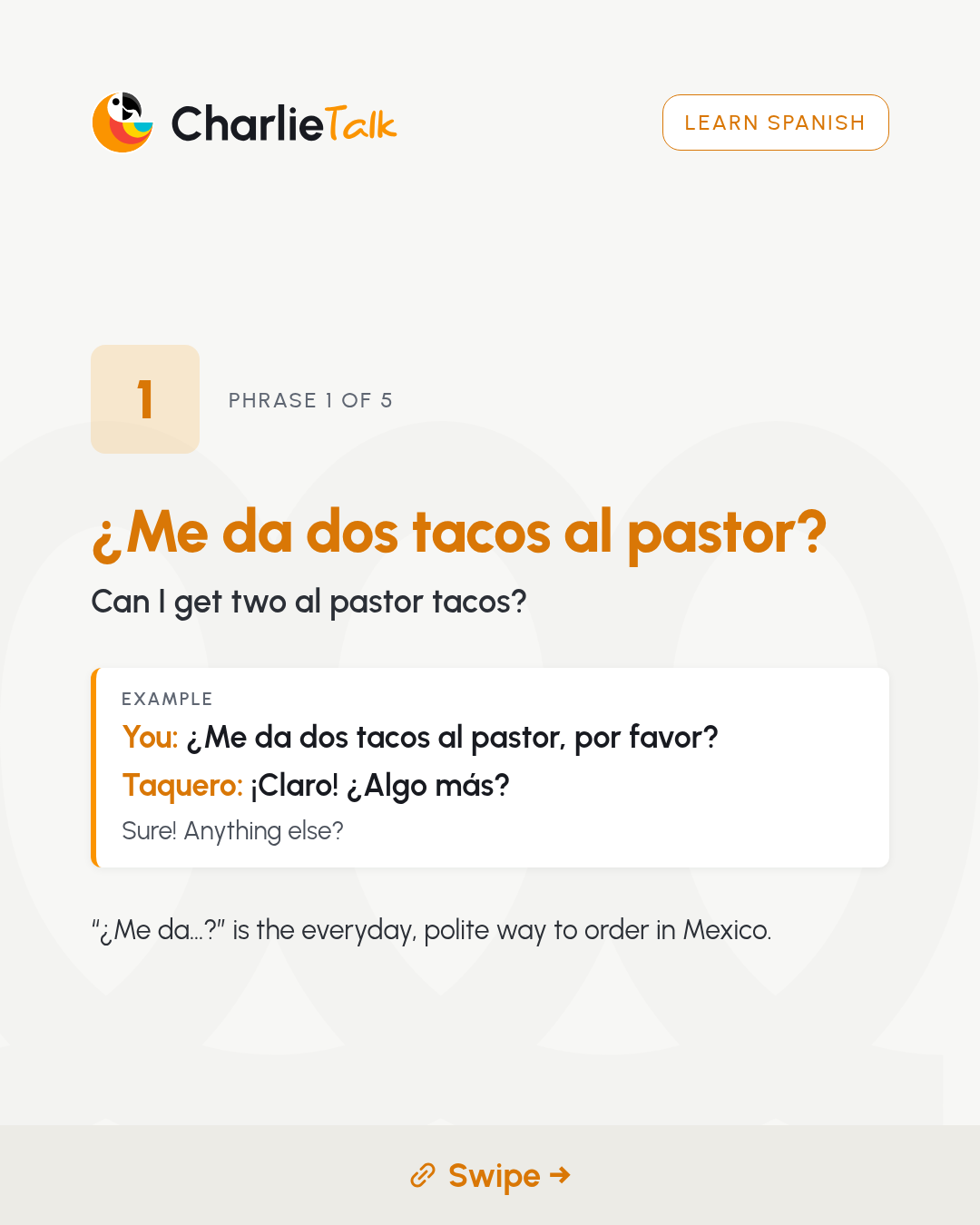
You: Buenas tardes. ¿Me da dos tacos al pastor, por favor? Vendor: ¡Claro! ¿Con todo? You: Sí, con todo. ¿La salsa roja pica mucho? Vendor: Un poquito. La verde pica más. You: Entonces la roja, por favor. Para llevar. Vendor: Son noventa pesos. You: Aquí tiene. Gracias.
That is one possible exchange, not a script every stand follows. Some people point at the trompo and say the filling. Some stands ask ¿De qué los quiere? instead of waiting for you to name al pastor. The pieces below are the ones you can reuse when the conversation does go this way.
1. ¿Me da…? is the ordinary polite order
¿Me da dos tacos al pastor, por favor? is "Can you give me two al pastor tacos?" Dar plus usted (da) is direct and polite. It is what you hear at counters all day.
Quisiera dos tacos al pastor is also correct. It is a little more formal, closer to "I would like". At a stand, ¿Me da…? does not sound blunt. At a sit-down restaurant, Quisiera or Me trae… fits just as well: ¿Me trae la carta, por favor?
If you switch to tú, the verb changes: ¿Me das dos tacos? The noun of the food stays the same. Al pastor is the filling (pork from the vertical spit). De bistec, de suadero, or whatever is written on that stand's list works in the same slot: ¿Me da uno de suadero?
2. ¿Con todo? is a toppings question
At many taco stands ¿Con todo? means "with everything on it", usually onion and coriander (cebolla y cilantro). It does not always include salsa. Salsa is often in pots on the counter, and you add it yourself or you are asked about it separately.
- Sí, con todo, por favor. — Yes, with everything.
- Sin cebolla, por favor. — Without onion.
- Sin cilantro. — Without coriander.
If you do not want to guess what "everything" is at that particular stand, you can ask: ¿Qué lleva el "con todo"? Not every place uses the phrase. A fonda or a market stall may ask ¿Con cebolla? ¿Con cilantro? one by one. Answer those the same way: sí or sin.
3. Picar is heat, not a flavour word
Picar for salsa means it stings. ¿Esta salsa pica mucho? — Is this salsa very hot? A useful reply to listen for is a comparison: Un poquito. La verde pica más — a little; the green one is hotter. That is a common pattern in Mexico City, not a promise that green is always hotter than red. Taste or ask each time.
You can also rank them yourself: ¿Cuál pica menos? — which one is less hot? Pica here is not the same as picar meaning to chop or to itch, though it is the same verb. In front of a salsa pot, heat is the meaning you want.
4. Para llevar and para aquí
Para llevar is takeaway. Para aquí is for eating here. The vendor's question is often ¿Para aquí o para llevar?
- Para llevar, por favor. — To go.
- Para aquí. — For here.
You will also hear ¿Para comer aquí? The answer is still about place, not about a new verb. If you are walking back to a hotel, para llevar is the one. If there is a counter and you are staying, para aquí.
5. Paying: ¿Cuánto le debo? and la cuenta
At a counter, ¿Cuánto le debo? — How much do I owe you? — is polite and ordinary. Le matches usted. With tú it is ¿Cuánto te debo?
The answer is often a number plus pesos: Son noventa pesos. You can hand over the money with Aquí tiene.
At a table you are not always told the total out loud at the end of the last bite. Then you ask for the bill: ¿Me trae la cuenta, por favor? In Mexico the bill is la cuenta. El cheque is the English "check" and is not the word you want here.
What to listen for
The vendor's turns are short. These are the questions worth recognising even if you miss everything else:
- ¿Con todo?
- ¿Para aquí o para llevar?
- ¿Algo más? — Anything else?
- Son … pesos.
You can answer the first two with the lines above. ¿Algo más? is a yes/no plus an extra item, or Nada más, gracias — nothing else.
Practice
Reply in Spanish. Then read why that reply fits.
- You want two al pastor tacos from someone you are addressing as usted.
- They ask ¿Con todo? and you want onion and coriander, but you are worried about the hot salsa and have not been told that salsa is included.
- You want the milder salsa and you have just heard La verde pica más.
- You are taking the food back to where you are staying.
- You are at the counter and you want the total. Then, separately: you are seated and you want the bill brought to you.
Answer key
- ¿Me da dos tacos al pastor, por favor? Da is usted. ¿Me das…? would be tú. Quisiera dos tacos al pastor is a more formal option and also fine.
- Sí, con todo, por favor. On a typical stand that is onion and coriander. Salsa is often separate, so "con todo" is not a promise about heat. If you need to know, ask ¿La salsa va incluida? or simply ask ¿Pica mucho? before you add any.
- Choose the one they said was milder. If green is hotter, that is the red: La roja, por favor. This depends on what they just told you. ¿Cuál pica menos? is the question when nobody has compared them yet.
- Para llevar, por favor. Para aquí would mean you are eating on the spot.
- At the counter: ¿Cuánto le debo? At the table: ¿Me trae la cuenta, por favor? Le and trae fit usted. The bill is la cuenta, not el cheque.
Pratique espanhol com um tutor
Reserve uma aula experimental e diga em voz alta o que você acabou de ler.
Encontre um tutor de espanhol