
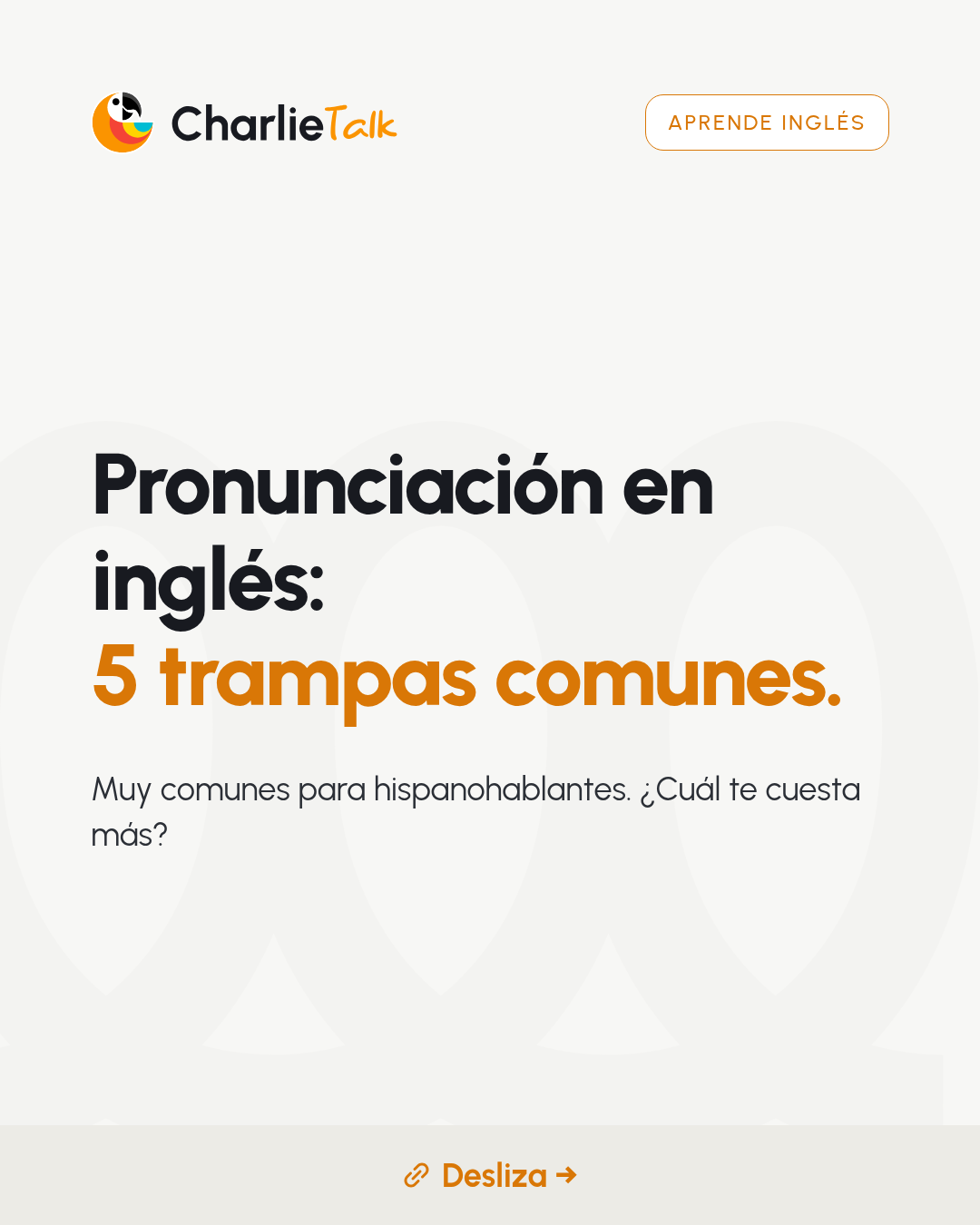
5 English Pronunciation Traps for Spanish Speakers
If you're learning English, grammar helps — but pronunciation is what gets you understood the first time. Many traps come from transferring Spanish habits: adding an "e" before s + consonant, stretching or shortening vowels, or avoiding sounds that don't exist in Spanish.
Here are five very common traps, with the correct form and a short line to practise out loud.
1. "Student" is not "es-tudent"
In Spanish we often add an e before s + consonant. In English, that e isn't there: student, school, Spain, speak.
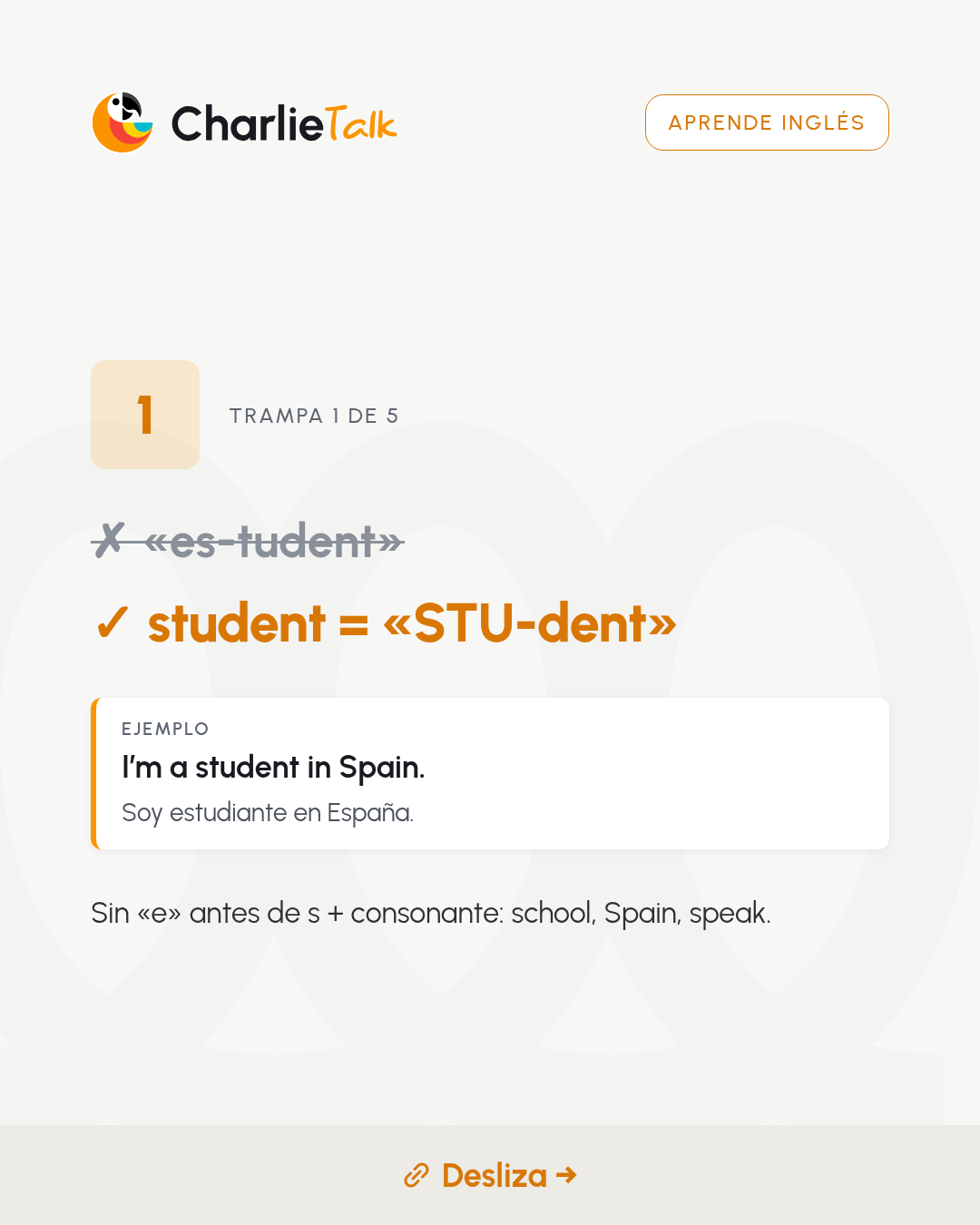
- ❌ es-tudent / es-pain
- ✅ I'm a student in Spain. — Soy estudiante en España.
Example: I'm a student in Spain.
Practise: Spain, speak, school, student — with no "e" at the start.
2. "Ship" and "sheep" don't sound the same
The i in ship is short (/ɪ/). The vowel in sheep is long (/iː/). Mix them up and you change the meaning.
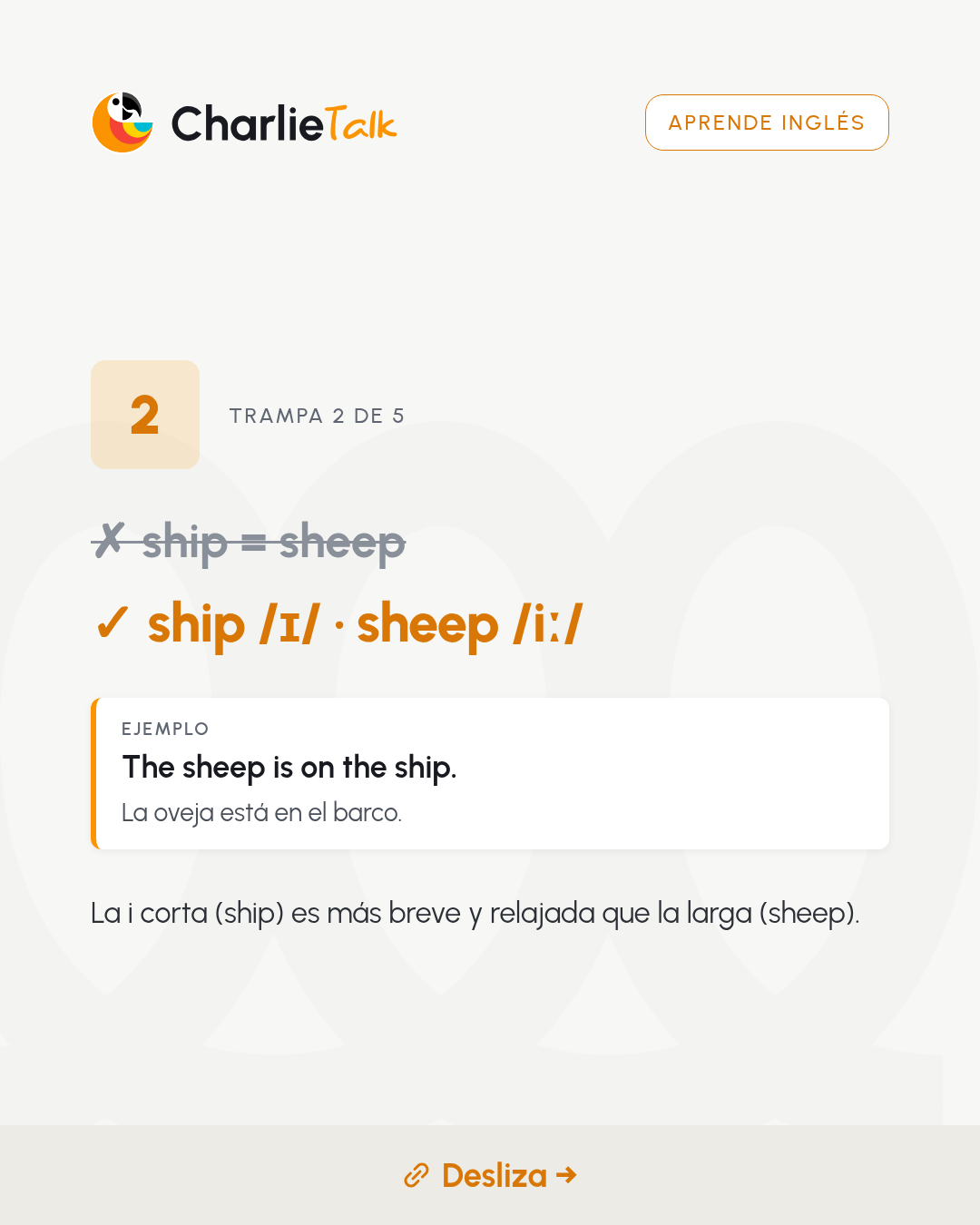
- ✅ The sheep is on the ship. — La oveja está en el barco.
Example: The sheep is on the ship.
Tip: ship = short and relaxed; sheep = longer, like a held "ee."
3. The "-ed" in "worked" often sounds like "workt"
In regular verbs, -ed is not always an extra syllable. After many voiceless sounds (such as /k/), it sounds like /t/: worked ≈ "workt". It's an extra syllable only after t or d: wanted, needed.
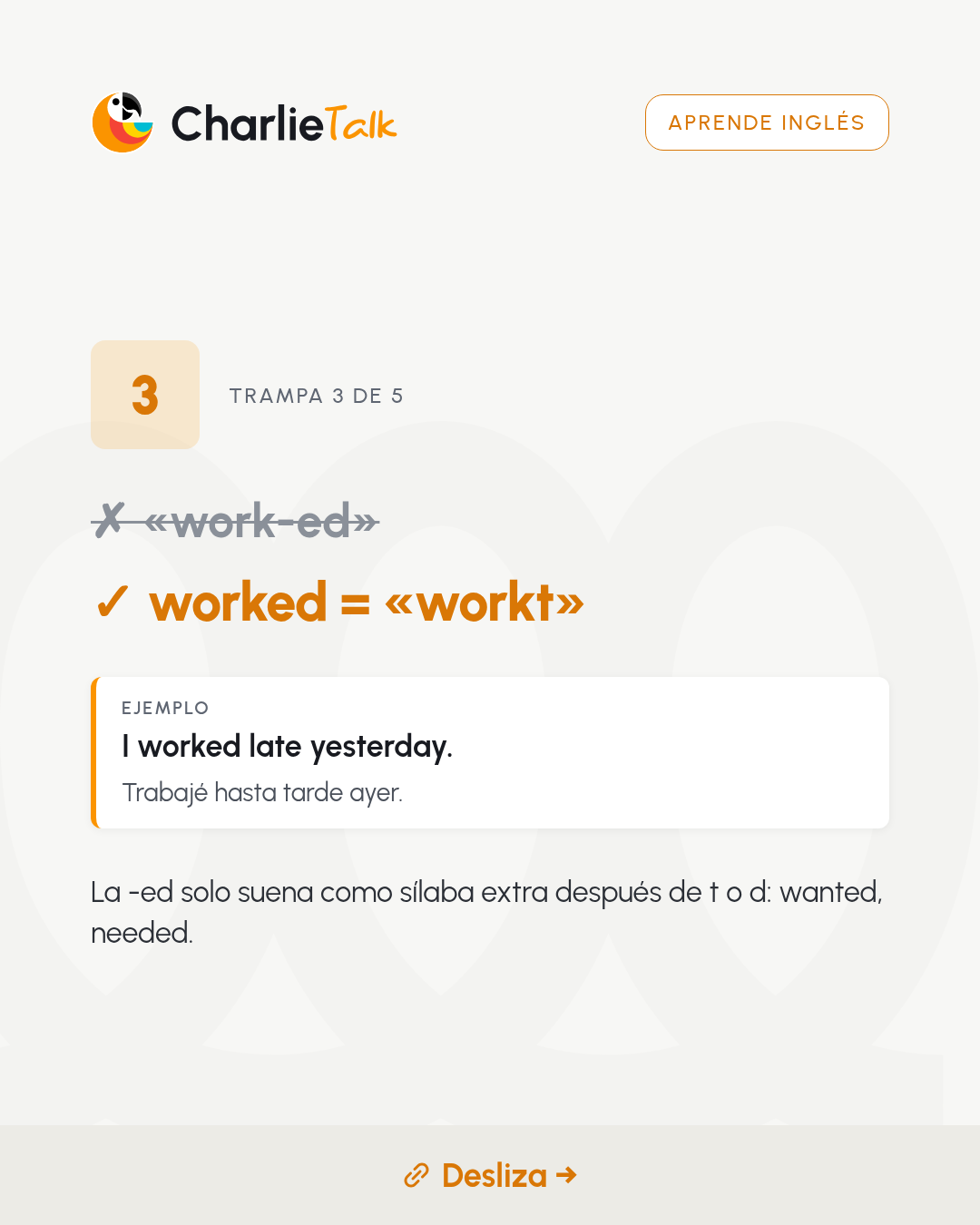
- ❌ work-ed (two clear syllables)
- ✅ I worked late yesterday. — Trabajé hasta tarde ayer.
Example: I worked late yesterday.
Compare: played (/d/), washed (/t/), wanted (/ɪd/).
4. "Very" is not "berry"
English v is made with the top teeth on the bottom lip. If you use both lips, as Spanish often does for "b", very sounds like berry.
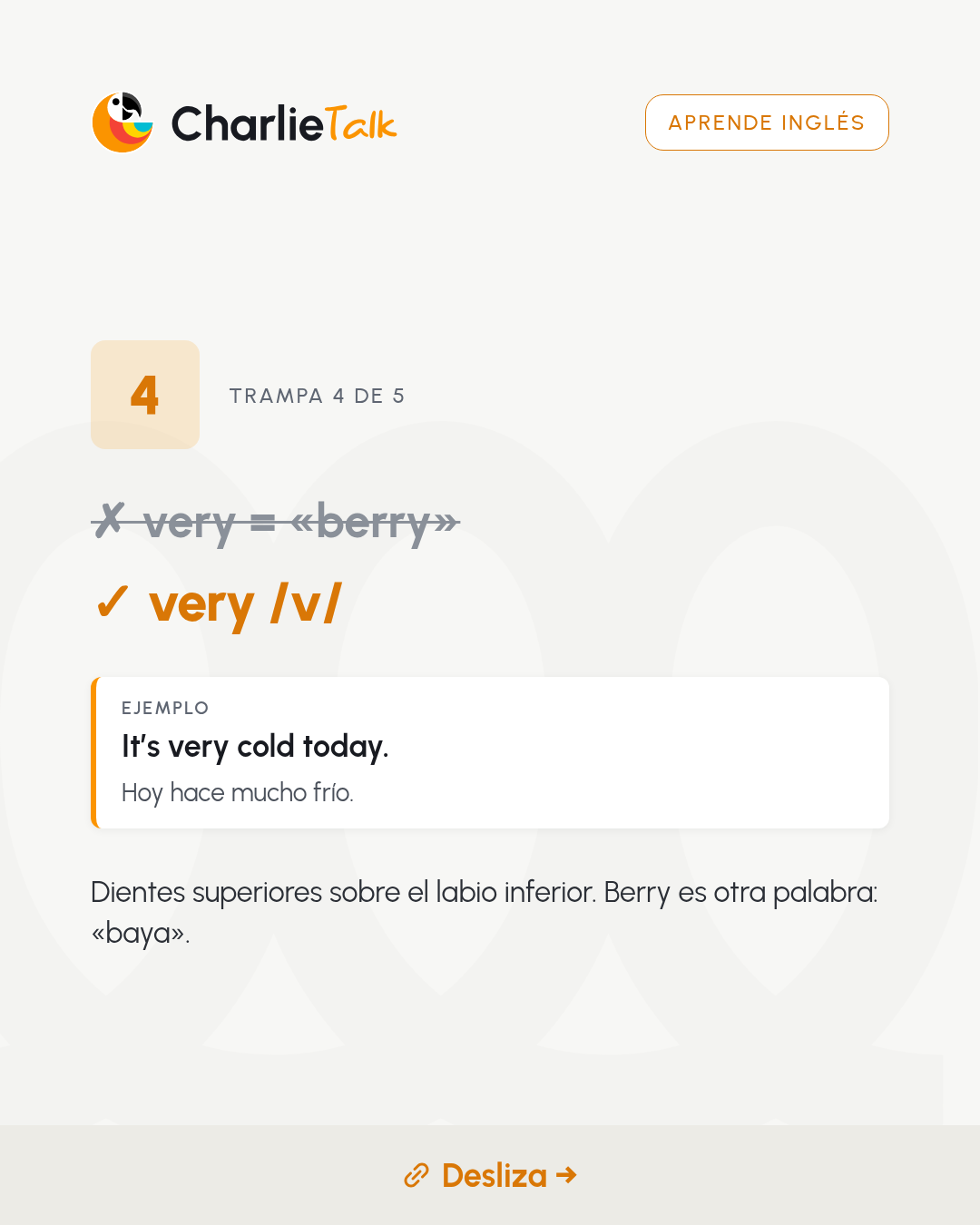
- ❌ berry cold
- ✅ It's very cold today. — Hoy hace mucho frío.
Example: It's very cold today.
Practise in a mirror: teeth on the lip, a soft stream of air — very, voice, video.
5. "Think" is not "tink" or "sink"
The voiceless th (/θ/) in think asks you to put the tongue a little between the teeth and blow gently. It isn't a t or an s.
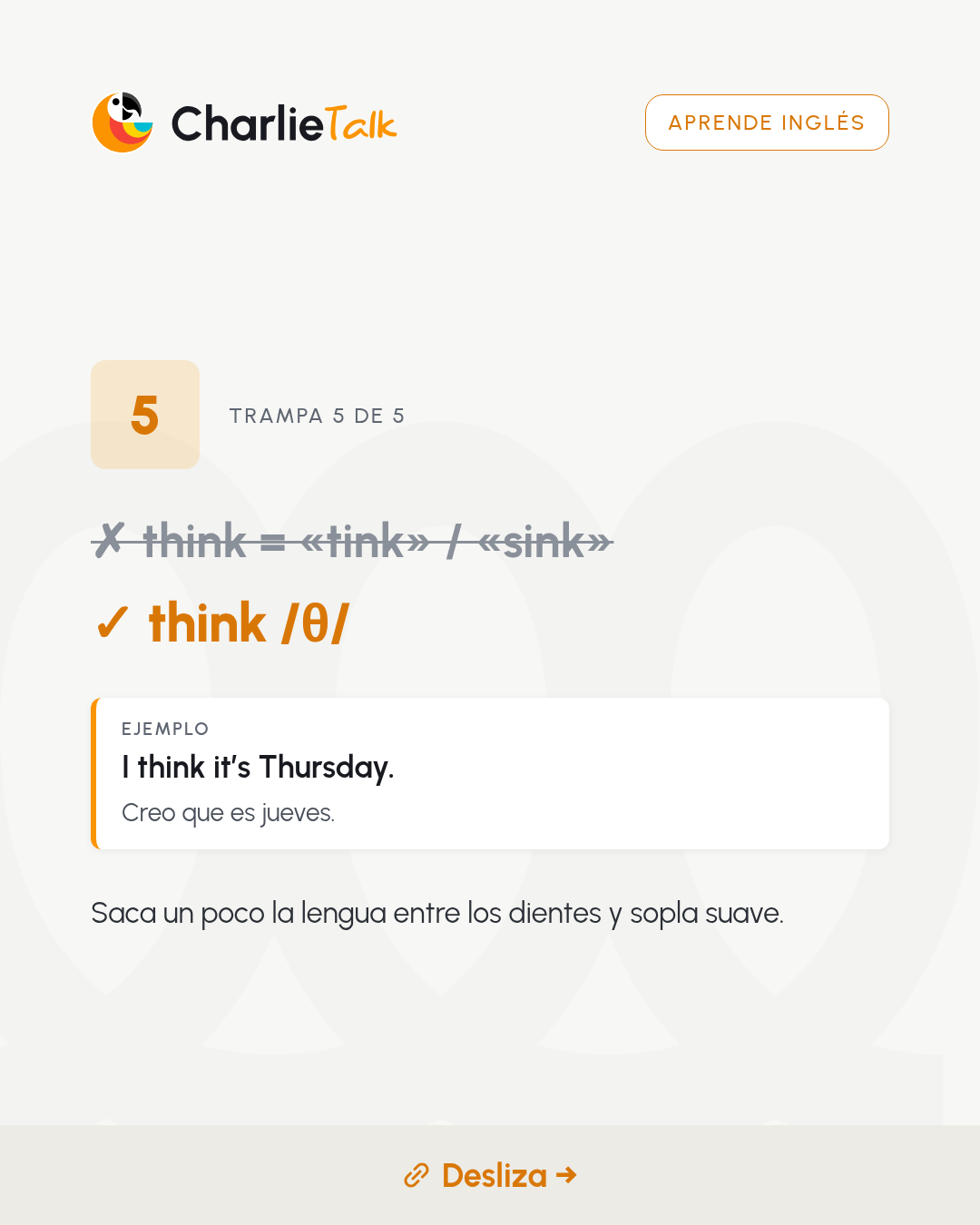
- ❌ tink / sink
- ✅ I think it's Thursday. — Creo que es jueves.
Example: I think it's Thursday.
More words with the same sound: three, thanks, bathroom.
Quick practice
Say these out loud (without looking, if you can):
- I'm a student in Spain.
- The sheep is on the ship.
- I worked late yesterday.
- It's very cold today.
- I think it's Thursday.
Mini quiz: what's wrong with "es-tudent"? → The opening e isn't there in English; say student.