

5 French False Friends English Speakers Mix Up
When you learn French, vocabulary that looks like English can feel like a shortcut. Sometimes it is. Sometimes it's a trap. These lookalikes — false friends — are spelt almost the same as an English word but mean something else. Use them wrong and you can sound confused… or accidentally say something awkward.
Here are five high-frequency false friends, with the wrong assumption, the real meaning, and a sentence you can practise out loud.
1. Actuellement ≠ actually
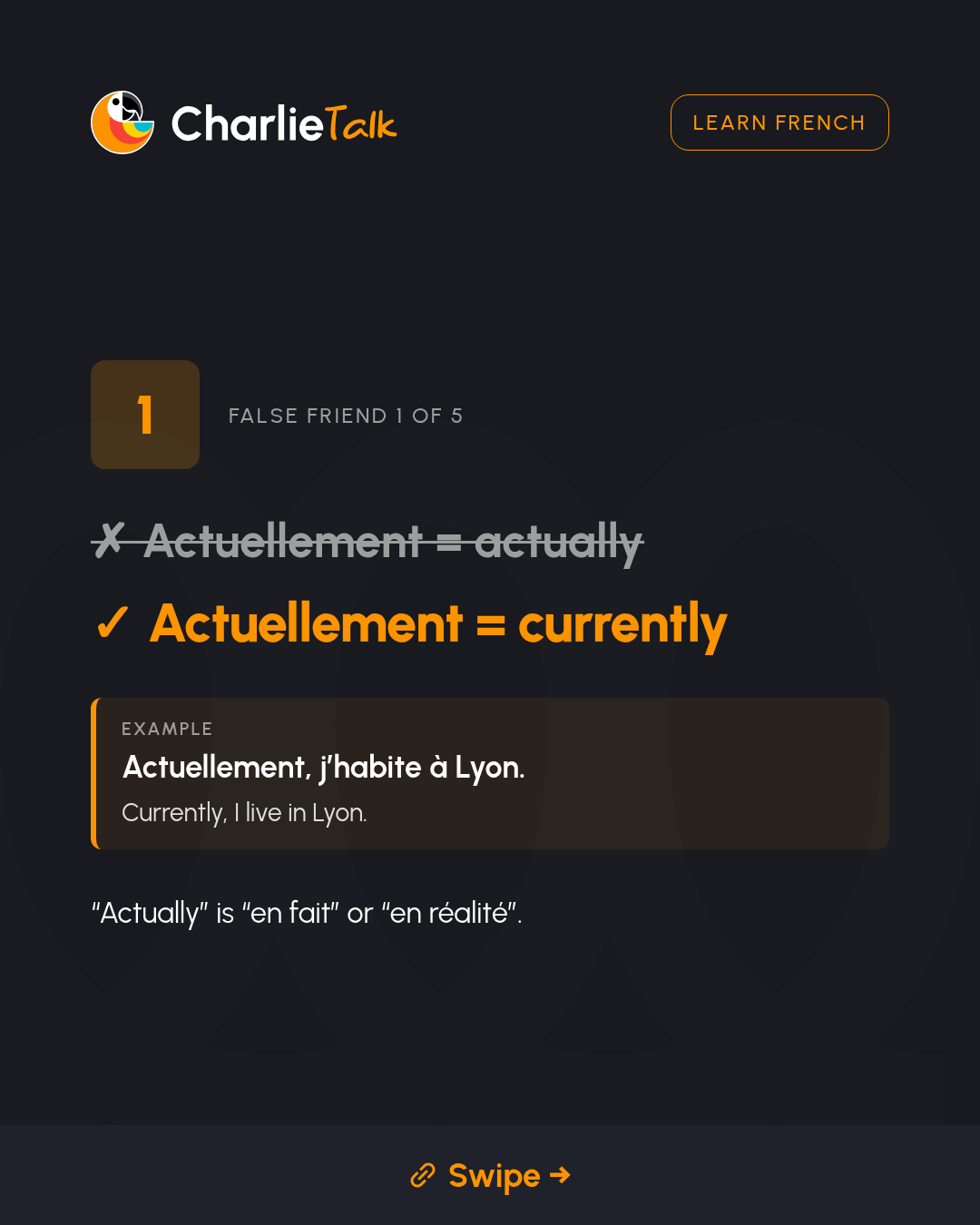
Wrong assumption: actuellement = actually Real meaning: currently / at the moment
For English "actually," say en fait or en réalité.
Example: Actuellement, j'habite à Lyon. (Currently, I live in Lyon.)
Contrast: En fait, je ne suis pas d'accord. (Actually, I don't agree.)
2. Sensible ≠ sensible
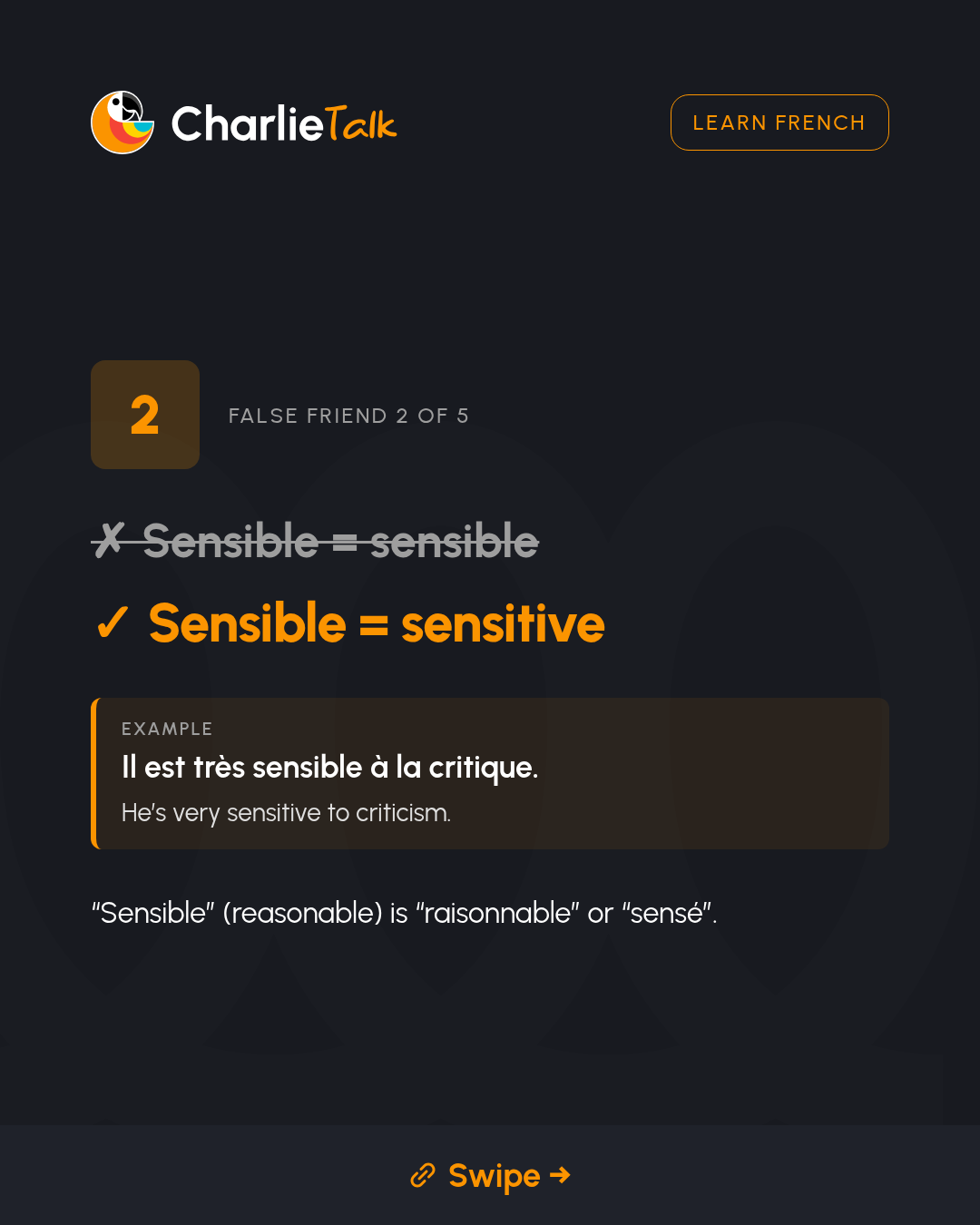
Wrong assumption: sensible = sensible (reasonable) Real meaning: sensitive
"Sensible" in the English sense is raisonnable or sensé.
Example: Il est très sensible à la critique. (He's very sensitive to criticism.)
Contrast: C'est une décision raisonnable. (That's a sensible decision.)
3. Assister ≠ to assist
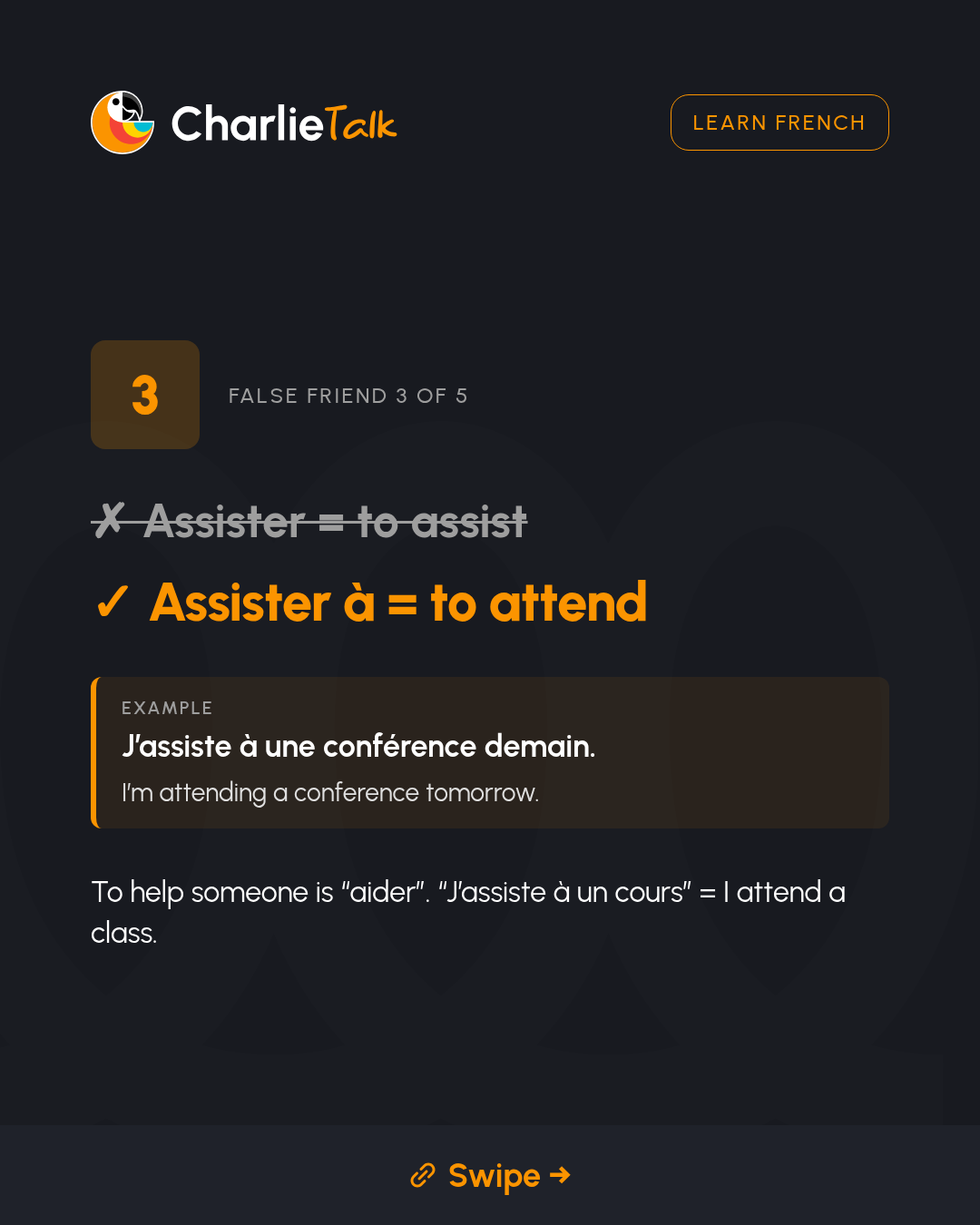
Wrong assumption: assister = to help / assist Real meaning: assister à = to attend
To help someone is aider.
Example: J'assiste à une conférence demain. (I'm attending a conference tomorrow.)
Contrast: Je t'aide avec tes devoirs. (I'll help you with your homework.)
4. Déception ≠ deception
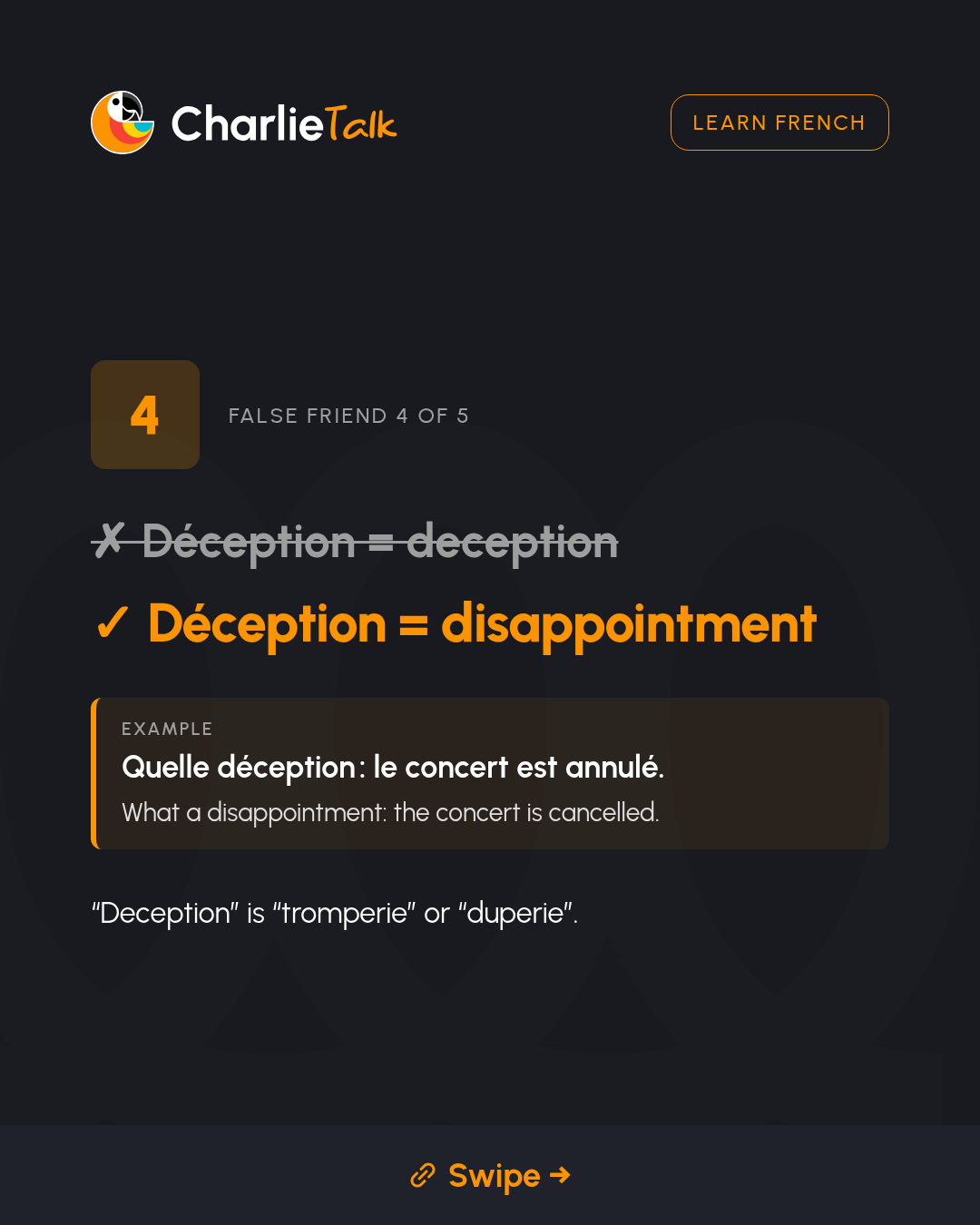
Wrong assumption: déception = deception Real meaning: disappointment
"Deception" is closer to tromperie or duperie.
Example: Quelle déception : le concert est annulé. (What a disappointment: the concert is cancelled.)
Related verb: Je suis déçu(e). (I'm disappointed.)
5. Blessé ≠ blessed
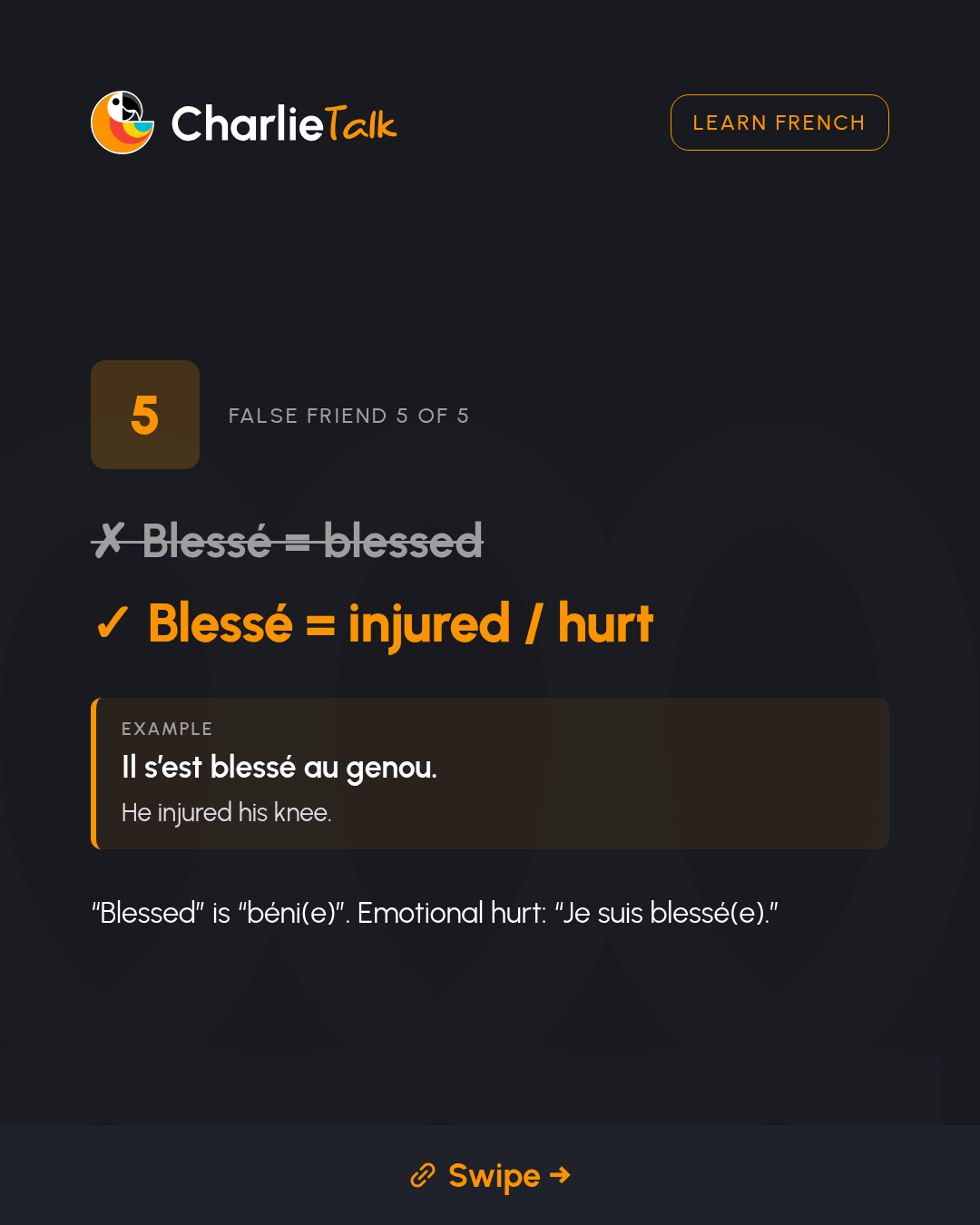
Wrong assumption: blessé = blessed Real meaning: injured / hurt
"Blessed" is béni(e). Emotional hurt also uses blessé(e).
Example: Il s'est blessé au genou. (He injured his knee.)
Contrast: Ce moment était béni. (That moment was blessed.) — rare in everyday chat; know it for reading.
Quick quiz
What does the French word really mean?
- actuellement → a) actually b) currently
- sensible → a) sensible b) sensitive
- assister à → a) assist b) attend
- déception → a) deception b) disappointment
- blessé → a) blessed b) injured/hurt
Answers: 1b · 2b · 3b · 4b · 5b
Now say each example sentence twice without looking. If the English twin still jumps into your head first, add a sticky note: lookalike ≠ meaning.
Why false friends feel so convincing
Your brain loves patterns. Seeing sensible or actuellement lights up the English twin automatically. The fix isn't "never trust lookalikes" — it's building a short blacklist of high-damage words and rehearsing the French meaning until it wins the race.
Extra false friends (bonus)
- librairie = bookshop (not library → bibliothèque)
- coin = corner (not a money coin → pièce)
- issue = exit (not a problem/issue → problème)
Learn those later. Master the five in this guide first so they stop hijacking your sentences.
Drill
Write five tiny flashcards: French word on one side, English meaning plus one example on the other. Review them while the kettle boils. Two days of that beats one hour of highlighting.