


Ser vs Estar in Portuguese: 5 Traps English Speakers Fall Into
English has one verb "to be." Portuguese has two: ser and estar. Mixing them up is one of the most common Portuguese mistakes for English speakers — and one of the most fixable, once you sort the patterns.
Here are five traps, with the wrong version, the right version, and a short example sentence.
1. How you feel right now → estar
Temporary feelings and states use estar.
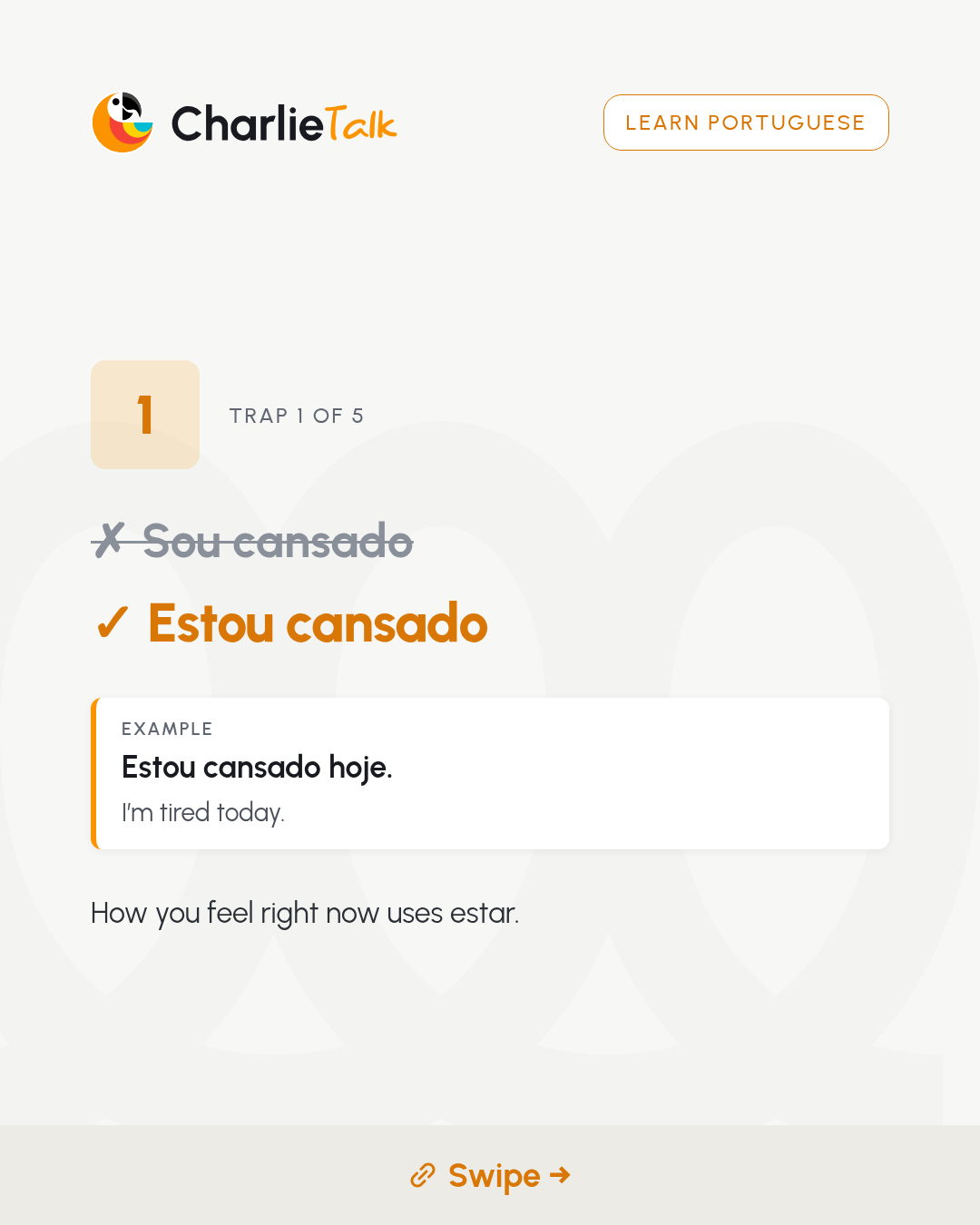
- ❌ Sou cansado.
- ✅ Estou cansado hoje. — I'm tired today.
Example: Estou cansado hoje. — I'm tired today.
Also: Estou feliz, Estou nervoso, Estou doente (feeling ill right now).
2. Nationality and identity → ser
Who you are — nationality, identity, essential characteristics — uses ser.
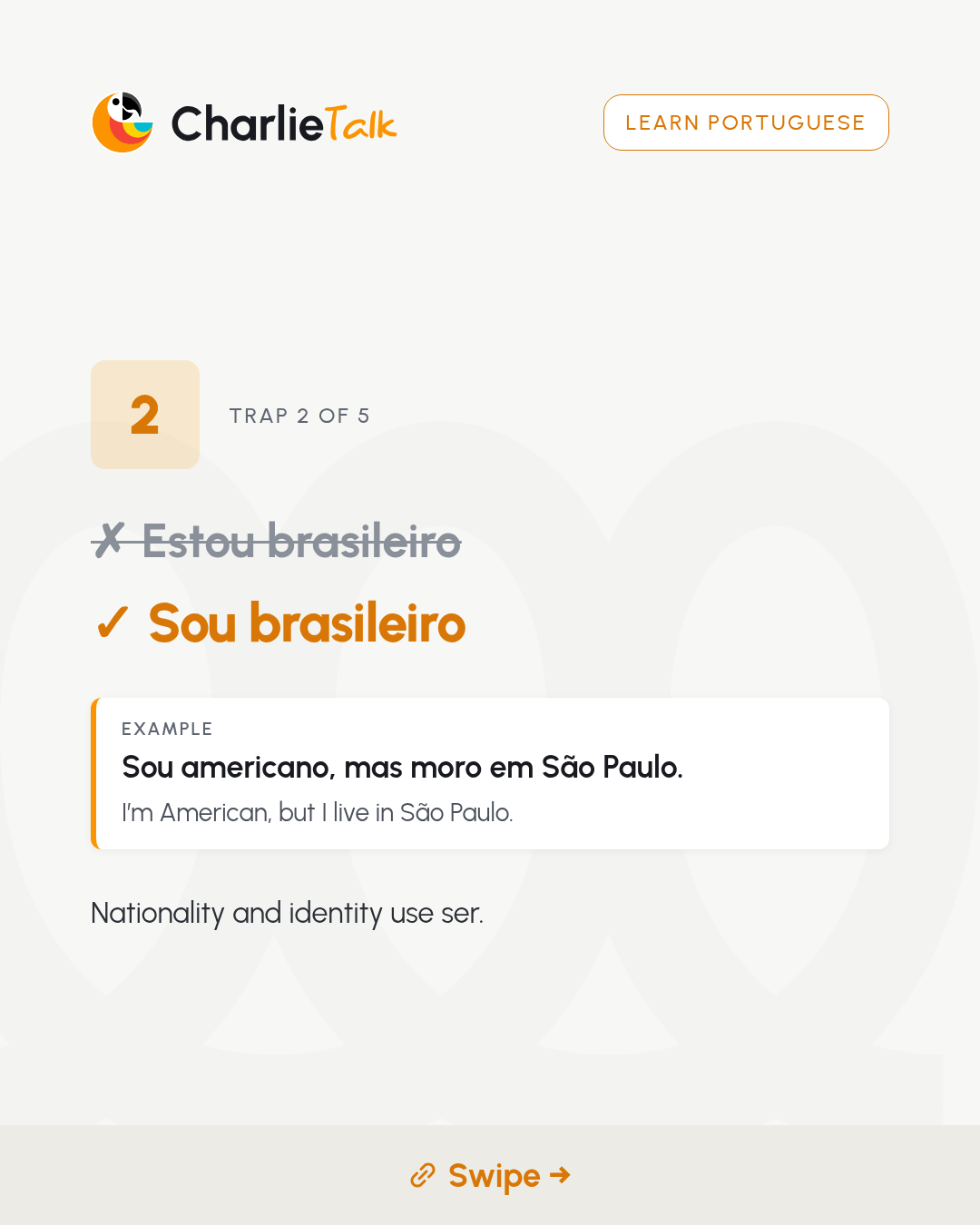
- ❌ Estou brasileiro.
- ✅ Sou americano, mas moro em São Paulo. — I'm American, but I live in São Paulo.
Example: Sou americano, mas moro em São Paulo.
Nationality doesn't change because you moved cities — so it stays with ser.
3. Where someone is right now → estar
Location in the moment uses estar.
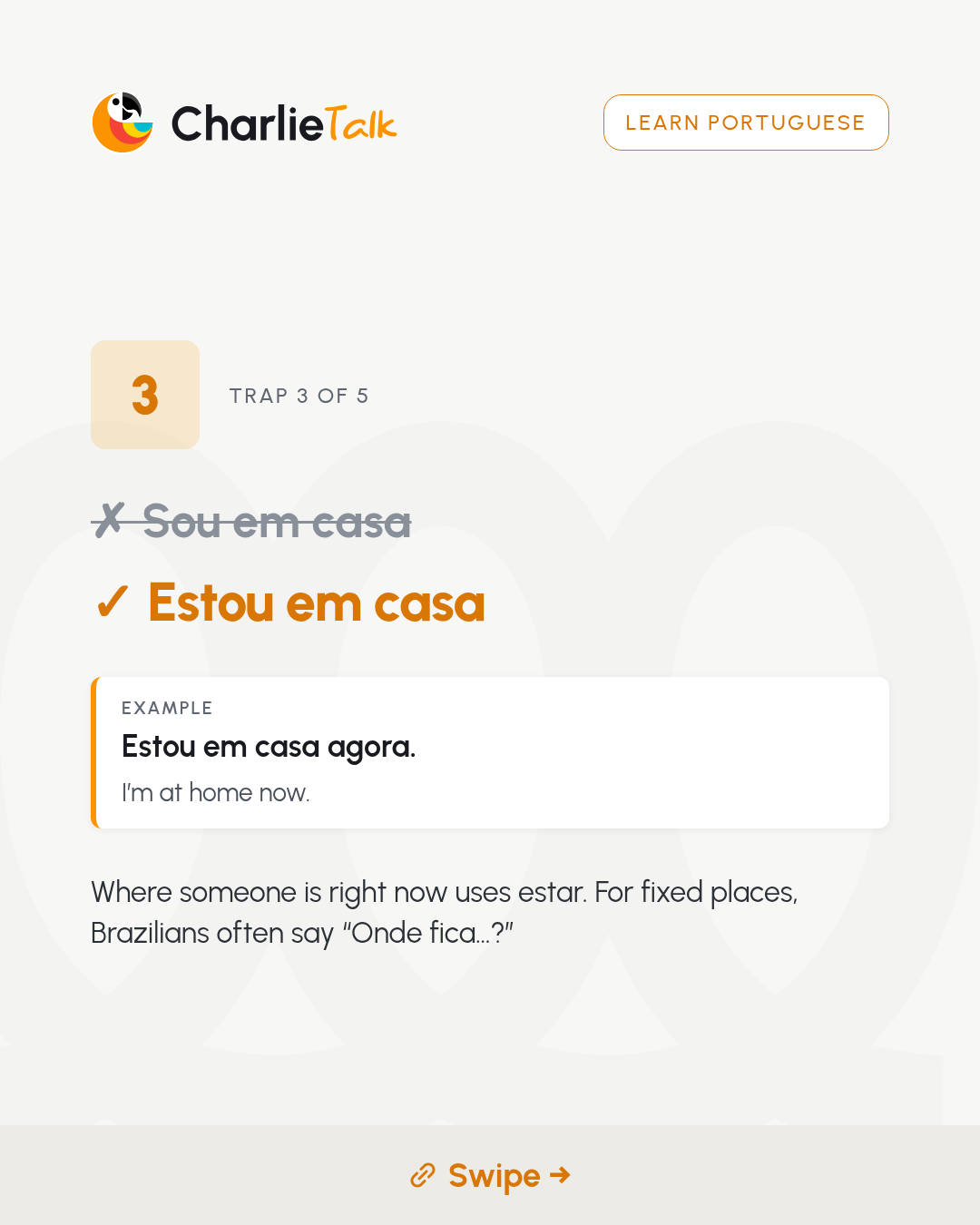
- ❌ Sou em casa.
- ✅ Estou em casa agora. — I'm at home now.
Example: Estou em casa agora. — I'm at home now.
Where something is permanently (for example a building's location) can use ser/ficar, but for "I'm here / there / at home right now," default to estar.
4. Professions → ser
Jobs and roles use ser.
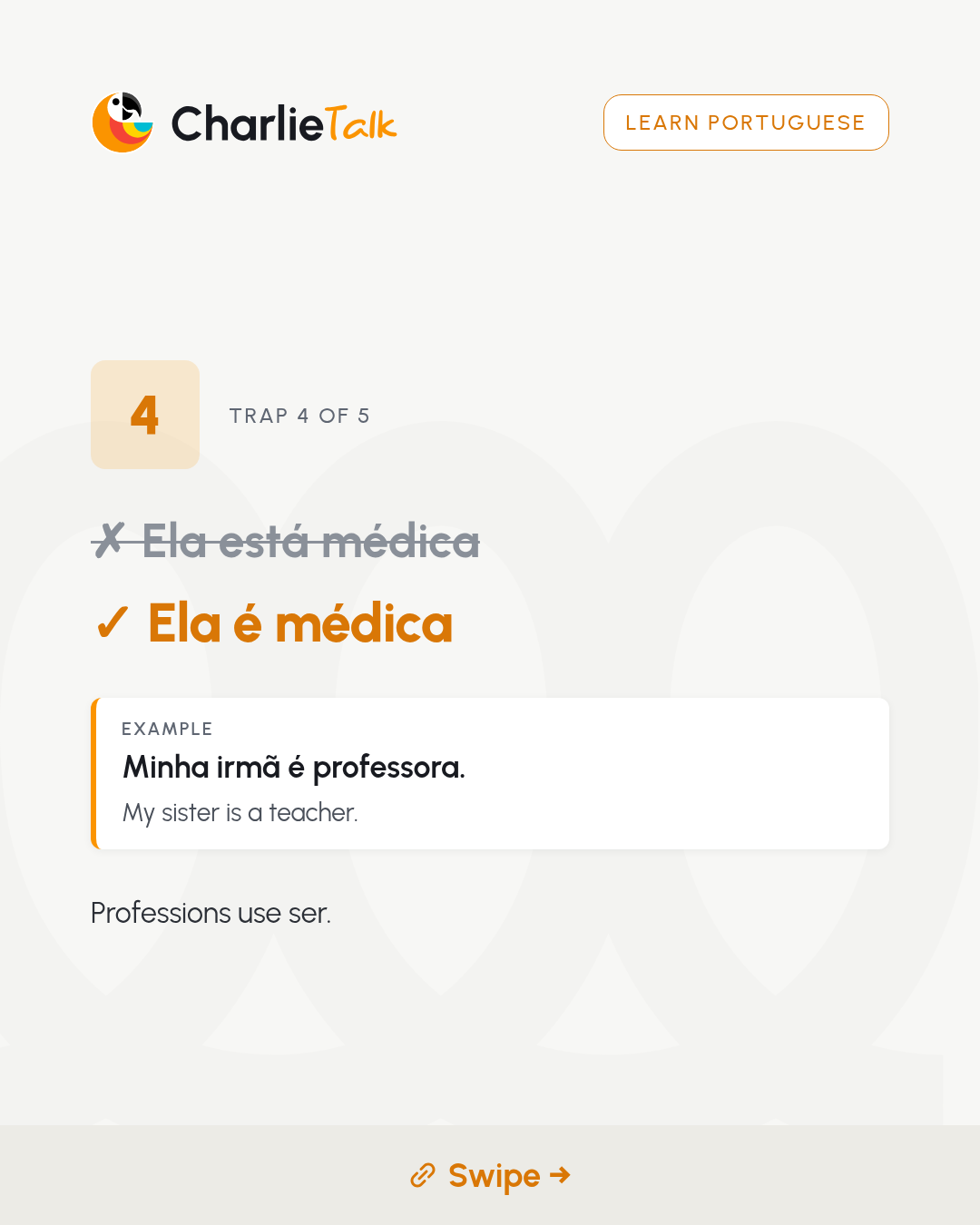
- ❌ Ela está médica.
- ✅ Minha irmã é professora. — My sister is a teacher.
- ✅ Ela é médica. — She's a doctor.
Example: Minha irmã é professora. — My sister is a teacher.
5. How something is right now → estar (vs general character with ser)
Ser describes what something is like in general (A sopa é boa — the soup is good / a good soup). Estar describes the current condition (está fria — it's cold at the moment).
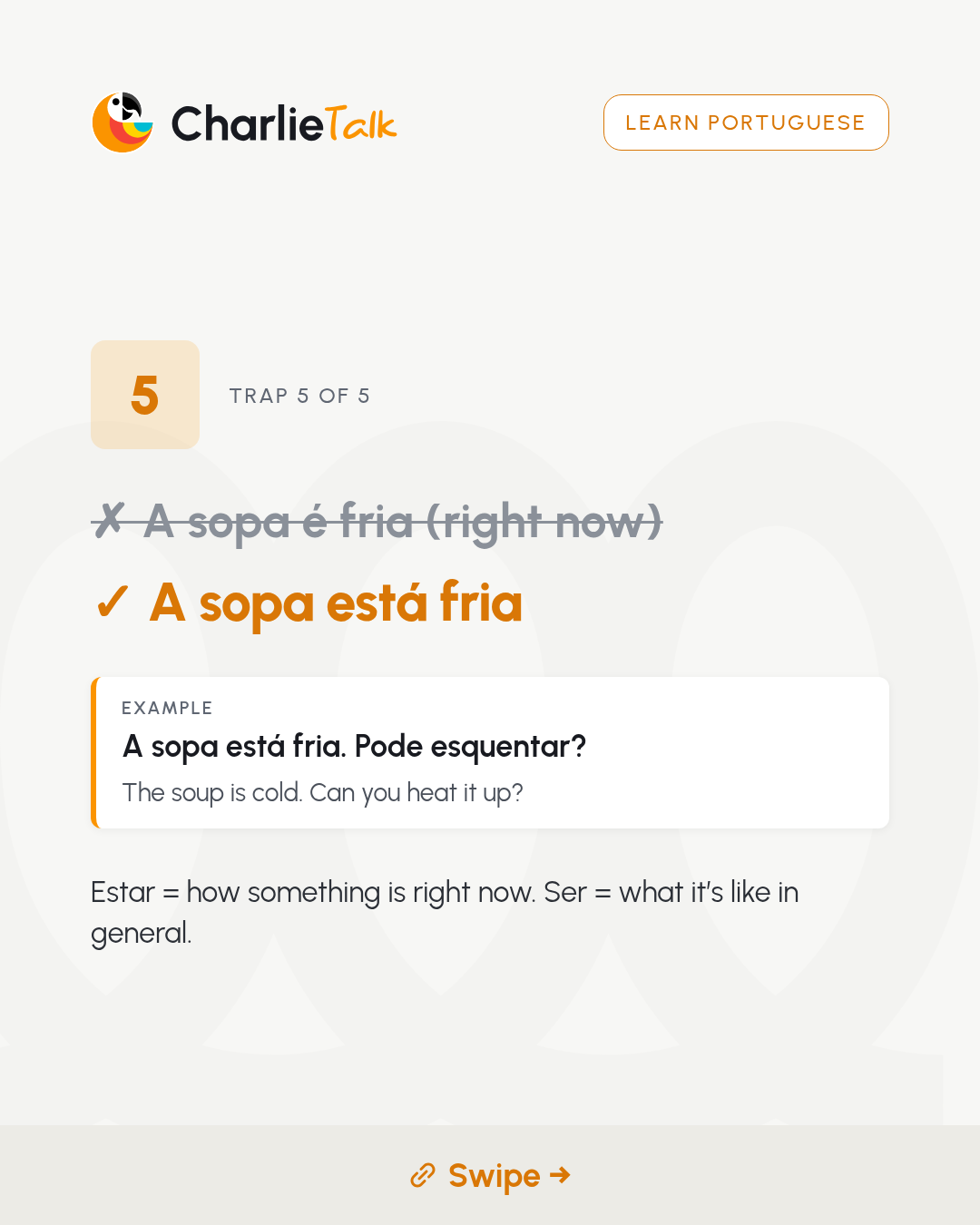
- ✅ A sopa está fria. Pode esquentar? — The soup is cold (right now). Can you heat it up?
Example: A sopa está fria. Pode esquentar?
A simple way to remember
Think of ser as identity and essence (who/what something is in a lasting way) and estar as condition and location (how/where something is right now). That one-line rule covers most beginner situations: nationality and jobs → ser; tired, at home, soup gone cold → estar.
Exceptions and edge cases exist (as in every language), but these five traps cover the errors English speakers make most often in early conversation. Master them first; refine the edge cases with a tutor later.
When you're unsure mid-sentence, ask yourself: "Is this who I am, or how/where I am right now?" That question alone prevents many slips.
Quick practice
Choose ser or estar:
- Tired today → Estou cansado.
- Brazilian → Sou brasileiro.
- At home now → Estou em casa.
- She's a doctor → Ela é médica.
- The coffee is cold right now → O café está frio.
Mini quiz: Eu ___ com fome. Feeling right now → Estou com fome (and note the estar com pattern for hunger).
Latih bahasa Portugis dengan tutor
Pesan pelajaran percobaan dan ucapkan keras-keras apa yang baru kamu baca.
Cari tutor bahasa Portugis