
How to Order Coffee in Brazil: Phrases from a Rio Café
To order coffee in Brazil, name the drink after a greeting, say whether you are staying or leaving, and pay when the counter asks you to. In Rio the default small coffee is um cafezinho. Tem pão de queijo? asks if they have cheese bread. Pra viagem is "to go". Aceita cartão? asks about card. Valeu is an informal thanks. Those lines are Brazilian Portuguese, and several of them are not what you would say in Lisbon.
A padaria or a café in Rio is often quick. Some counters take the order and the money in one breath. Others write a comanda and you pay at the caixa. Specialty cafés may bring the cup to a table and settle up later. The dialogue below is one counter visit. It is not every doorway in the city.
European Portuguese coffee words, including bica and se faz favor, are in Landing in Lisbon: 5 Portuguese phrases. Ser and estar, and the other frequent mix-ups, are in ser vs estar and common Portuguese mistakes.
How polite to be
Brazilian requests climb a short ladder. All of these can order a coffee. They are not the same distance from the person serving you.
- Me vê um cafezinho. — Very informal, "get me a coffee". Fine with a busy counter you already know. Stiff with someone you have just met if your tone is off.
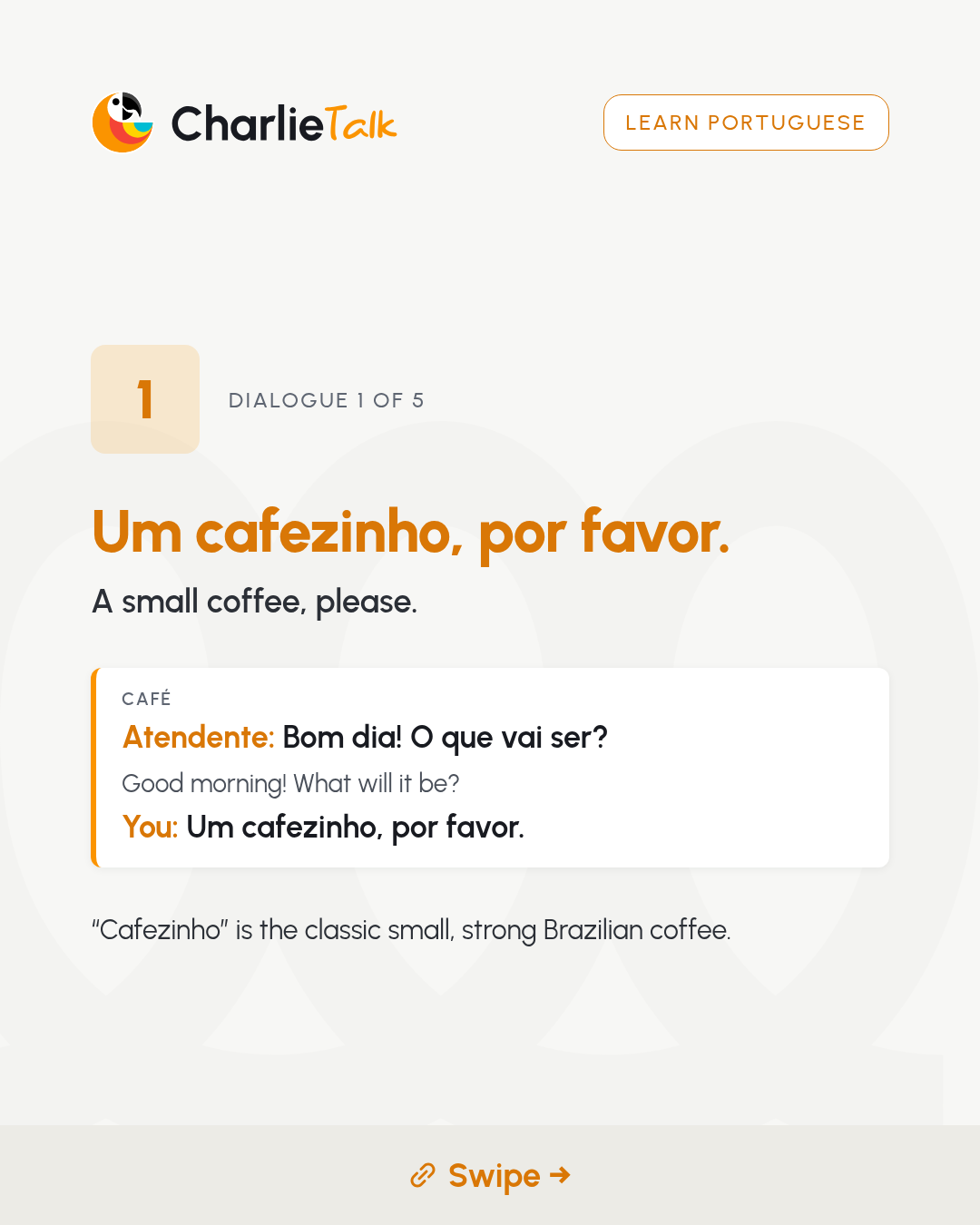
- Um cafezinho, por favor. — Neutral. The line to use first.
- Queria um cafezinho. — A notch softer, "I'd like".
- Gostaria de um cafezinho. — The most formal of the four.
Posso ter um café? copies English "can I have". It is understandable and it is not how people order. Use queria, gostaria, or the plain noun plus por favor.
Você is the normal "you" in Rio. Tu is common in other parts of Brazil and in Portugal. You do not need tu to order in Rio.
One counter visit
You: Bom dia. Atendente: Bom dia! O que vai ser? You: Um cafezinho e um pão de queijo, por favor. Sem açúcar no café. Atendente: Pra comer aqui ou pra viagem? You: Pra comer aqui. Atendente: Pode sentar. O pão de queijo sai quentinho. You: Aceita cartão? Atendente: Aceito. Crédito ou débito? Também temos Pix. You: Débito. Valeu. Atendente: Valeu, volte sempre.
O que vai ser? is "what will it be?" Quentinho is "nice and warm". Volte sempre is "come again".
If you are leaving with it, swap one line: Pra viagem, por favor. Pra is the spoken shortening of para. In writing you will also see para viagem.
The drinks and the bread
Cafezinho is a small, strong coffee. In a lot of traditional padarias it arrives sweet, or the sugar is already in the culture of the order. That is not a rule of the city. A specialty café will often ask, or leave the sugar with you. Say sem açúcar if you do not want it sweet, and com açúcar if you do. Do not assume the cup is sweet until you have been to that counter.
Pão de queijo is Brazilian cheese bread, associated with Minas Gerais and sold all over the country, including Rio. Tem pão de queijo? is "do you have it?" Tem is "there is / you have", not a verb you use to mean "I would like". Tem sim is a Brazilian yes.
Other cups you can put in the same sentence: um pingado (coffee with a little milk, the name you will hear in much of the country) and uma média in some regions for a milky coffee. Names move. If the board says something else, read the board.
Paying
At many counters you pay as part of the order. Card is Aceita cartão? Credit or debit is the usual follow-up: crédito ou débito? Pix is Brazil's instant bank transfer. You may be offered it. Not every café uses it, so aceita cartão? is the question that still works if Pix is not on the counter.
Where there is a comanda, you keep the slip and pay at the caixa before you leave. Where someone brings the cup to your table and nobody has taken money, you are in the later-payment pattern. Ask Onde eu pago? — where do I pay? — rather than guessing which of the two this shop uses.
Obrigado if you are a man, obrigada if you are a woman. The word agrees with you, not with the server. Valeu is an informal thanks used across Brazil and constantly in Rio. Até mais is "see you". Beleza means "ok" or "cool" in informal speech. Coé is a very informal Rio greeting. It is not the line for a server you do not know.
Rio and Lisbon are not the same order
| Rio, Brazilian Portuguese | Lisbon, European Portuguese |
|---|---|
| um cafezinho | uma bica (Lisbon espresso) |
| por favor | por favor or se faz favor |
| você at the counter | tu is common in Portugal |
| pra viagem | para levar is the safer European "to go" |
If you only know the Lisbon list, bica will not get you a coffee in Rio. If you only know Rio, se faz favor and bica are the Lisbon page, not this one.
Carioca speech often turns an s at the end of a syllable into a "sh" sound: dois and mais can sound like they end in sh. That is a listening note for Rio, not a pronunciation you must produce, and it is not all of Brazil.
Practice
Play both sides. Then check the key for the choice, not only the words.
- It is morning. You want a small coffee, unsweetened, and you have not been to this padaria before. How do you open, and which politeness level do you use?
- You want cheese bread. Ask if they have it.
- They ask Pra comer aqui ou pra viagem? You are staying.
- You want to pay by debit card. They might also mention Pix.
- You are leaving. Thank them informally.
- You are in Lisbon the following week. What do you not say if you want an espresso?
Answer key
- Bom dia. Queria um cafezinho sem açúcar, por favor. Or the neutral Um cafezinho sem açúcar, por favor. Me vê is more familiar than a first visit needs. Gostaria is fine and more formal. Posso ter is the English calque to skip. Sweetening depends on the place, so sem açúcar is how you refuse sugar rather than hoping the cup is plain.
- Tem pão de queijo? Tem asks whether it exists. Queria um pão de queijo orders it. Tem sim would be their yes.
- Pra comer aqui. Pra viagem would mean you are taking it away. Pra is spoken para.
- Aceita cartão? Then débito. If they offer Pix, you can use it. If they do not, the card question still stands. Pay at the counter unless they use a comanda or bring the cup and take payment later. Onde eu pago? covers that doubt.
- Valeu, até mais. Obrigado or obrigada matches your gender if you want the neutral thanks. Coé is too informal for this goodbye.
- Do not order um cafezinho or uma bica interchangeably. In Lisbon the espresso word in the other article is uma bica. Cafezinho is the Brazilian order.
تدرّب على اللغة البرتغالية مع مدرّس
احجز درسًا تجريبيًا وقل بصوت عالٍ ما قرأته للتو.
ابحث عن مدرّس اللغة البرتغالية