

Café and Métro in Paris: 5 French Mini-Dialogues
You don't need perfect French to get through a Paris café or métro ride — you need a few ready-made exchanges and the replies you'll actually hear. Start every interaction with Bonjour, speak a little slower than you think you need to, and these five mini-dialogues will cover a lot of ground.
1. Ordering a coffee
In Paris, un café usually means an espresso.
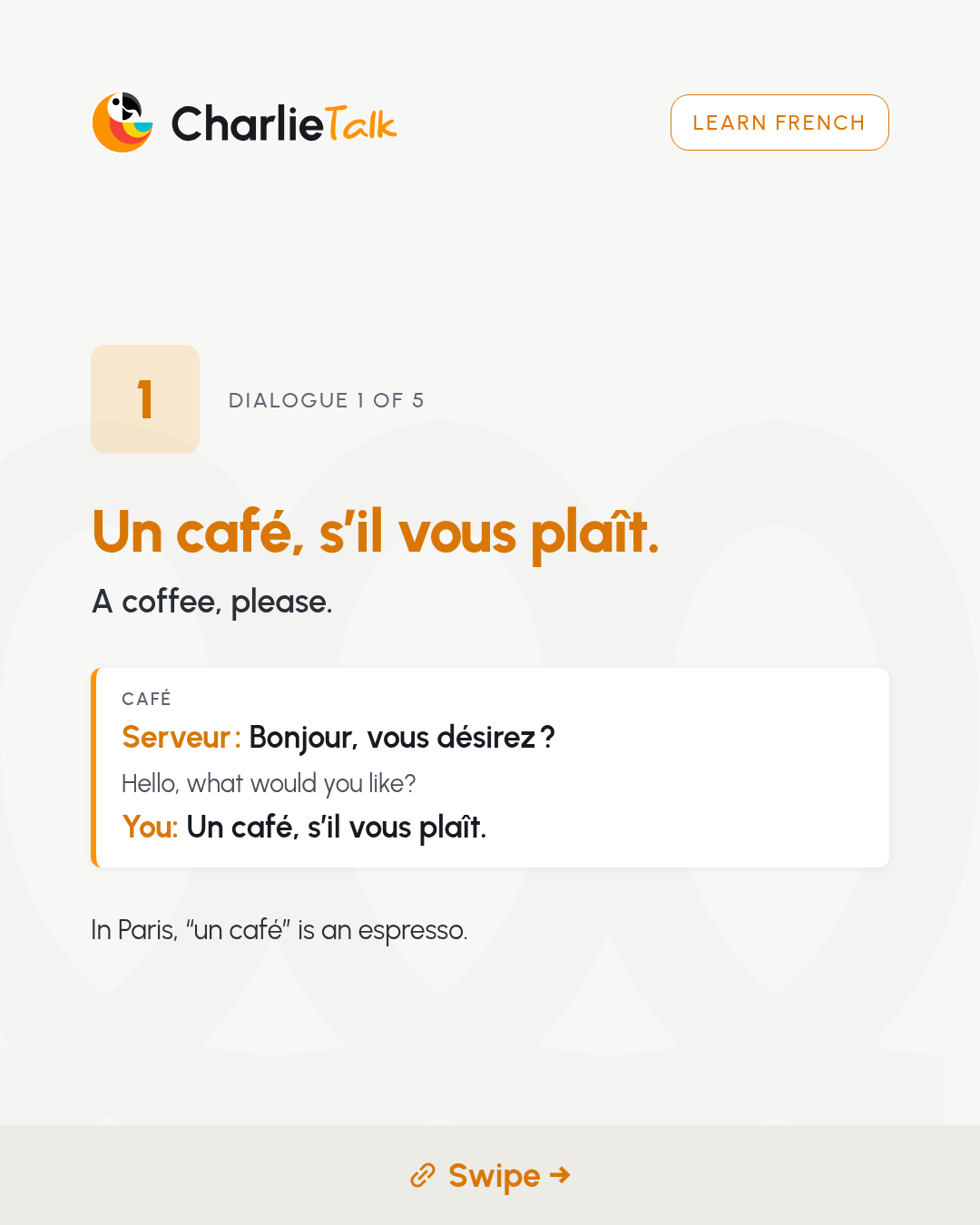
- Serveur: Bonjour, vous désirez ? — Hello, what would you like?
- You: Un café, s'il vous plaît.
Want something longer? Un café allongé (longer espresso) or un café crème (with milk). Always open with Bonjour.
2. For here or to go?
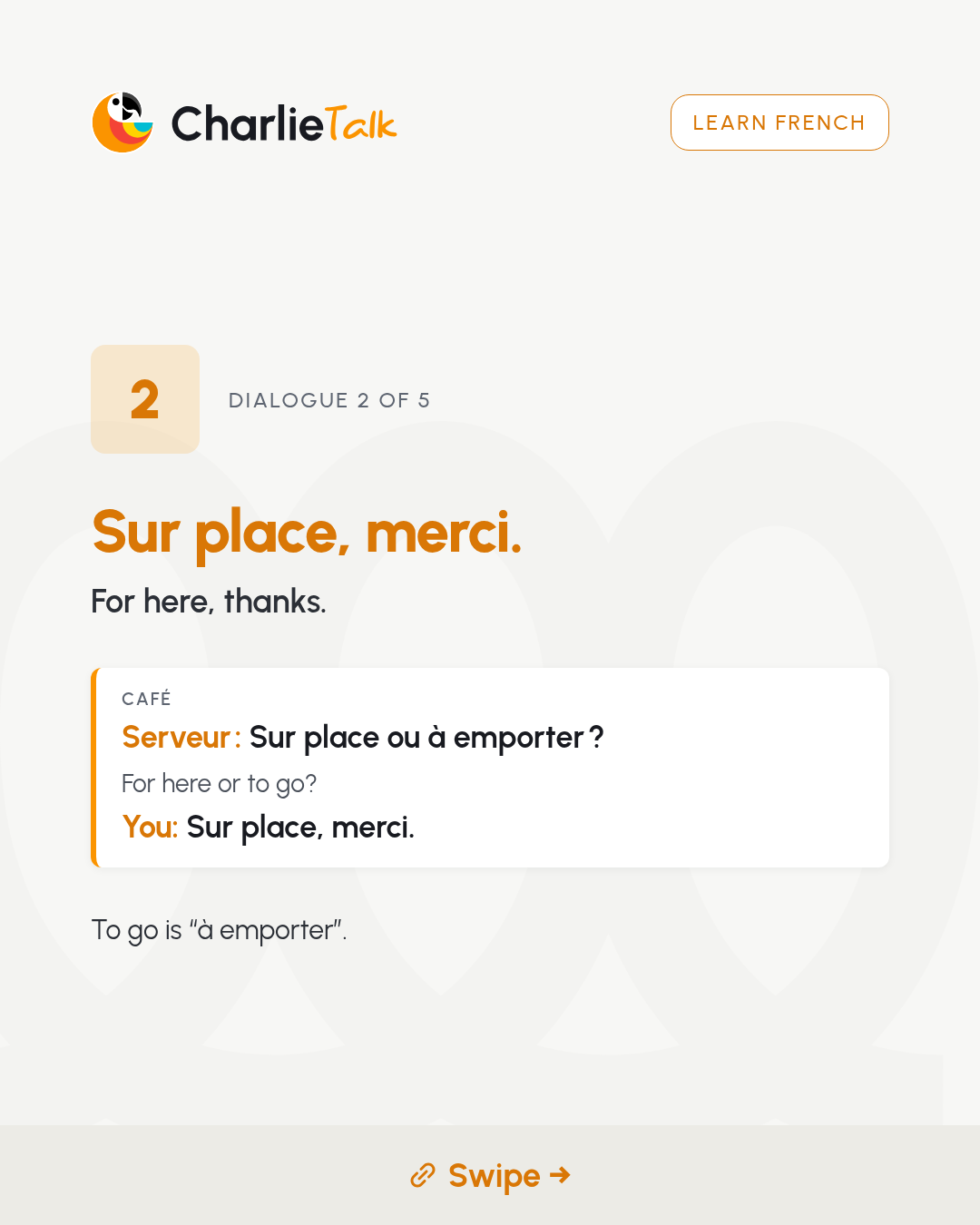
- Serveur: Sur place ou à emporter ? — For here or to go?
- You: Sur place, merci. — For here, thanks.
À emporter = to go. Sur place = for here. You'll hear this pair in cafés and bakeries all over the city.
3. Asking for the bill
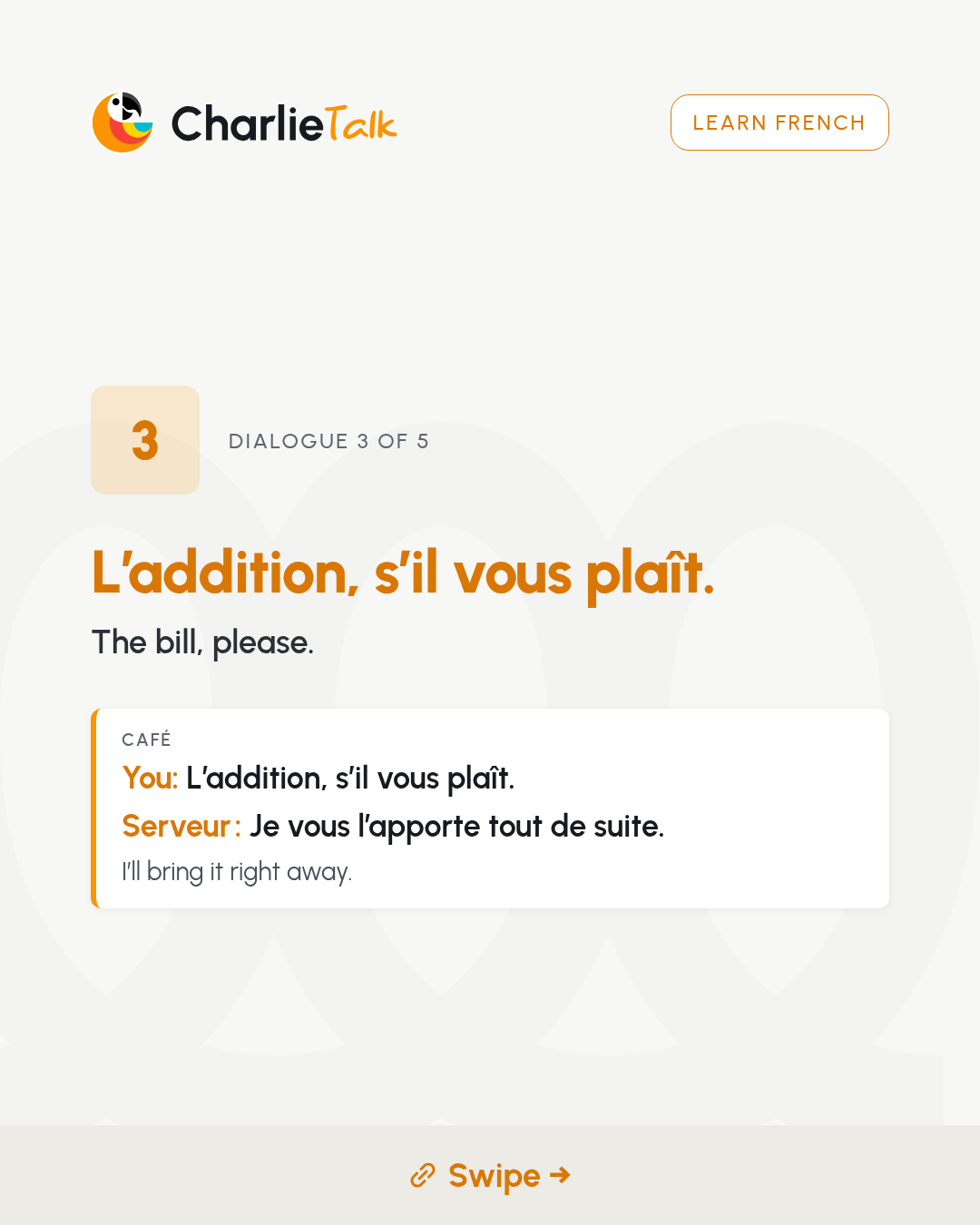
- You: L'addition, s'il vous plaît. — The bill, please.
- Serveur: Je vous l'apporte tout de suite. — I'll bring it right away.
Polite, clear, and standard. You can also catch the server's eye and say simply L'addition, s'il vous plaît.
4. Finding your métro line
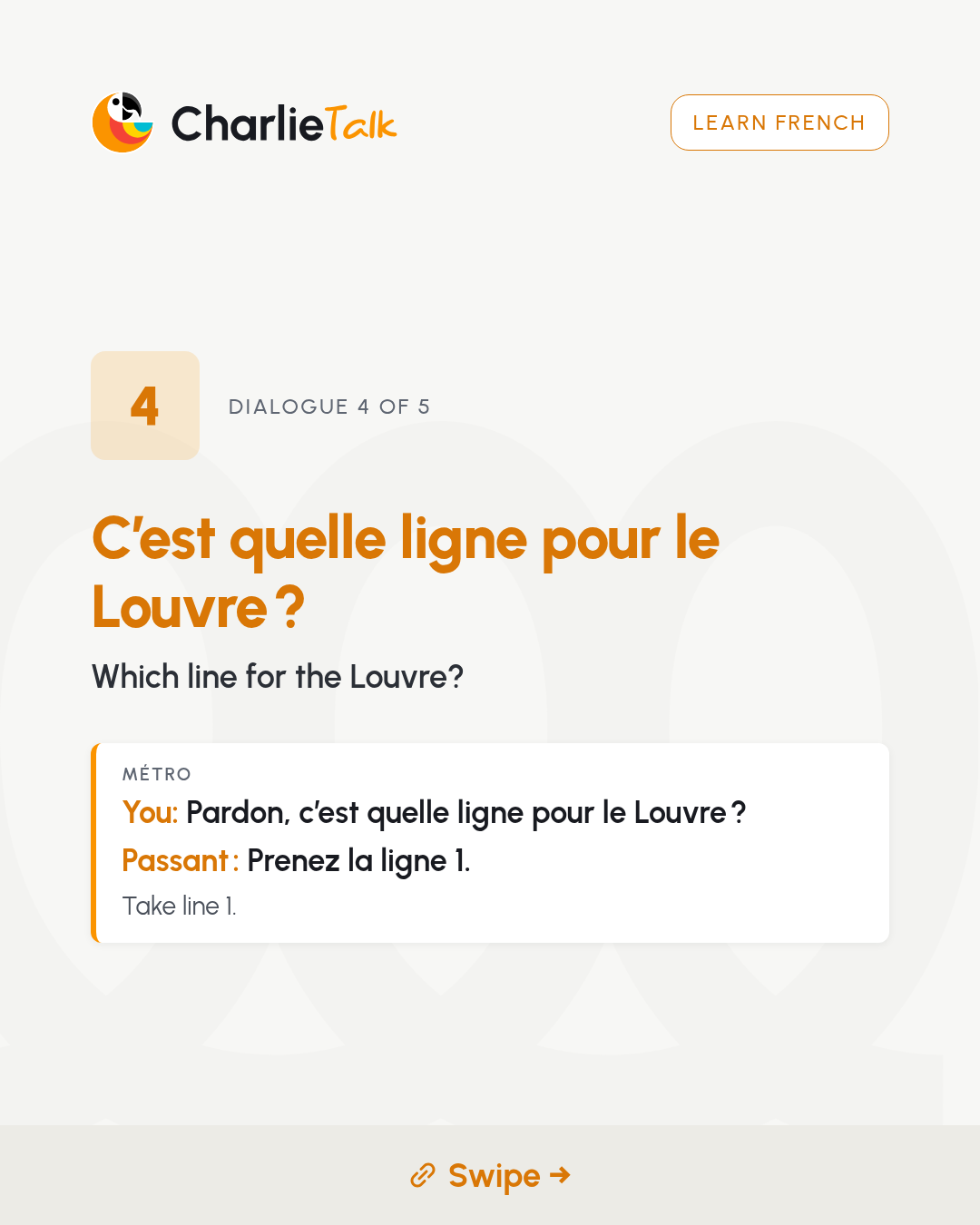
- You: Pardon, c'est quelle ligne pour le Louvre ? — Excuse me, which line for the Louvre?
- Passant: Prenez la ligne 1. — Take line 1.
Pardon softens the interruption. C'est quelle ligne pour… ? works for any landmark or station name.
5. Getting off the métro
Crowded carriage, your stop coming up:
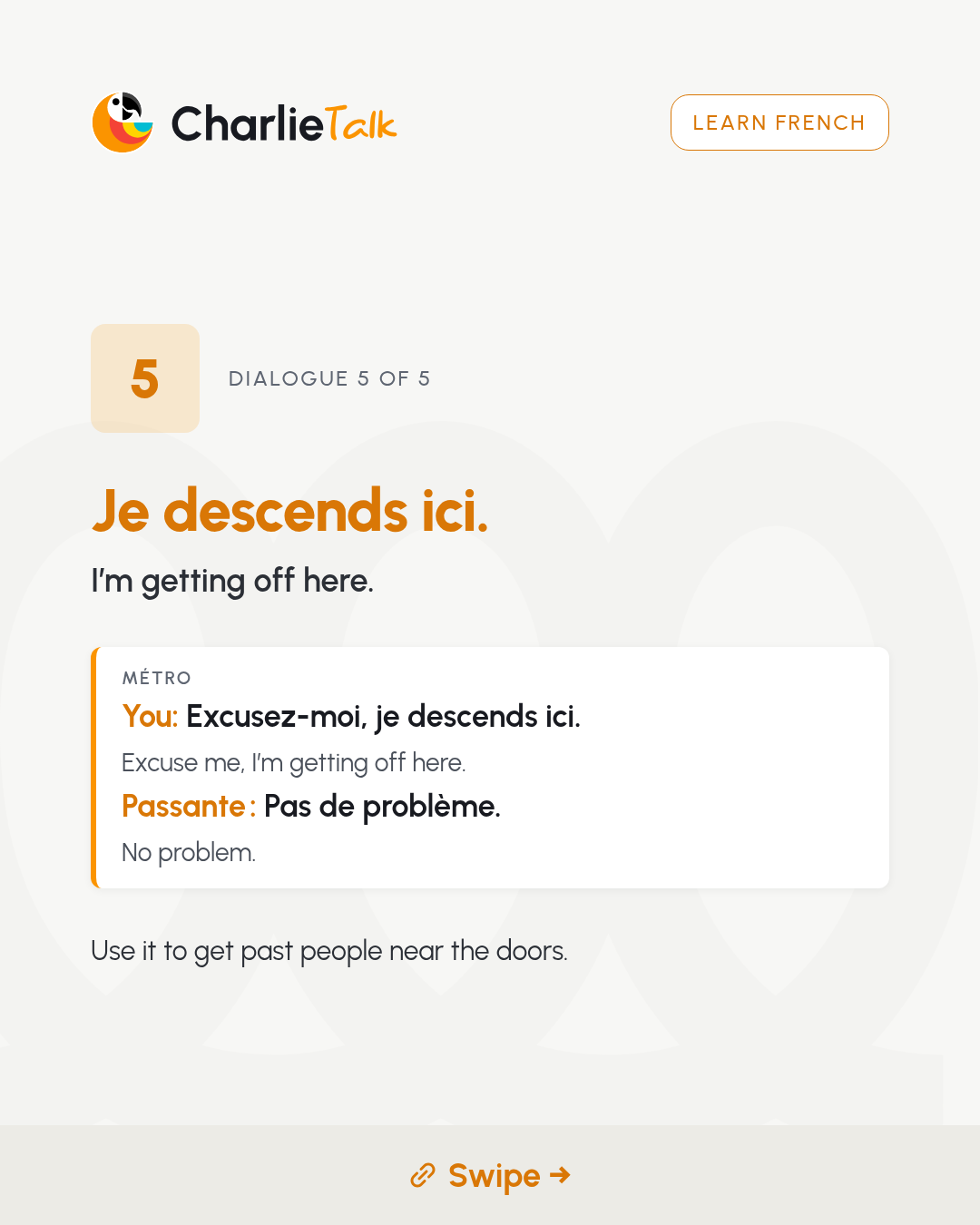
- You: Excusez-moi, je descends ici. — Excuse me, I'm getting off here.
- Passante: Pas de problème. — No problem.
Short, polite, and exactly what locals say when they need space to exit.
Small habits that help in Paris
Beyond the five dialogues, three habits make every café and métro exchange smoother:
- Always greet first. Bonjour (or Bonsoir in the evening) before you order or ask a question.
- Keep it short. One clear sentence beats a long apology in English.
- Listen for the reply pattern. Once you've heard Sur place ou à emporter ? a few times, you'll answer on autopilot.
If someone switches to English, you can stay in French with a smile: En français, s'il vous plaît — je pratique. Most people are happy to help when you're making a real effort.
Quick practice
Role-play out loud:
- Bonjour. Un café, s'il vous plaît.
- Sur place, merci.
- L'addition, s'il vous plaît.
- Pardon, c'est quelle ligne pour le Louvre ?
- Excusez-moi, je descends ici.
Mini quiz: the barista asks Sur place ou à emporter ? and you want it to go → À emporter, s'il vous plaît.
Tip: start every café or shop exchange with Bonjour. It sets the tone before anything else.